A young woman's hands knitting with pink wool

ADHD & Practicing Christian Spirituality

Pastor, if you notice someone knitting during your sermon, don’t be offended. It’s not (necessarily) because your sermon is boring, it might be their way of practicing attention to your sermon.

In my recent research, I’ve been listening to people with ADHD talk about their spirituality and spiritual practices. I’ve heard people with ADHD say that they could, in lectures and sermons, spend a lot of their mental energy on ensuring that it looks like they are paying attention. But that leaves them with little mental energy to spend on actually paying attention. Many people with ADHD say that in those kinds of spaces they need to do something else with their mind and body—perhaps something creative with their hands—in order to ground themselves and attend to what we are saying: knitting, colouring, painting, fidgeting, even playing a mindless game on their phone. But the narratives of shame are so strong, both internally and enacted by us in community. The disapproving glance, the snide comment, and the direct rebuke all make church spaces exclusionary. They communicate directly and indirectly to people of all kinds of diversity that you don’t really belong here as you are.

I started down this research track because of an uncomfortable gift of critical feedback: I had been teaching some content in a spiritual formation class in an overly neurotypical way. Once my eyes were opened to that, I went looking for resources, and found almost nothing to help me help my neurodivergent students.


Continue reading

Standard
Cropped image of a box of books with the title "Pursuing Perfection: Faith and the Female Body" edited by Maja Whitaker

Pursuing Perfection: Faith & the Female Body

In the recent cinema awards season, the scrutiny of celebrity bodies has taken a new turn. The Golden Globe Awards was jokingly described by the host as “Ozempic’s biggest night,”[1] referring to the popularity of the new weight-loss drug Ozempic (semiglutamide, also sold as Wegovy). Fans and critics have scrutinised photographs for signs of “Ozempic face”, a gaunt look due to the loss of facial fat, and compared them with past images to decide who is “cheating” with Ozempic to manage their weight. But is this “cheating”? Or is it just another tool in the beauty game or the “war on obesity”?  A tool that is radically effective and has, perhaps, shifted the rules of both game and war. 

This could be good. The use of Ozempic promotes weight loss without the need for strenuous exercise and diet control, factors that almost every person in the Western world knows that they “should” be trying harder at. It would make thinner bodies accessible to more people, and surely that’s a good thing—or so the thinking goes when we are assuming that thinner bodies are healthier bodies and simply better bodies. 

Continue reading

Standard
Photo of the harbour mouth in Westport. Grey sea in the lower third, then a strip of land with a small building, and above a foreboding grey sky.

The back of the hand to everything

In January last year, I looked at the previous year and said, “gosh, that was hard.” I looked ahead to the year to come and thought about all the ways that it was going to be better: I had great plans for fresh, life-giving rhythms for my self, my work, and my family. Perhaps I should have been forewarned by the words that God gave me for the year, “this is what we’ve got to work with.” Maybe I thought I’d learnt enough about limits for now, and that I was just going to learn to live within what I had already discovered.

But in February we realised how sick my mum really was. Her “barely a cancer” cerebellar tumour was affecting way more than her balance, in ways the neurosurgeon couldn’t explain. She lost her words, she lost her peace, she lost her will to live, and in early May we lost her.

Near the end of June I was starting to feel the ground beneath my feet again, when my dad had “news.” Something suspicious had popped up on his liver. Eventually we realised it wasn’t the prostate cancer we already knew about, instead it was likely a metastatic melanoma staging a takeover of his internal organs and bones. Optimistic as always, he struggled to face his own mortality, but, even stoic as he was, he couldn’t ignore the pain. In November we sat with vigil with him as he passed, just two doors down from where my mother had died six months earlier.

It was not a better year.

Continue reading

Standard
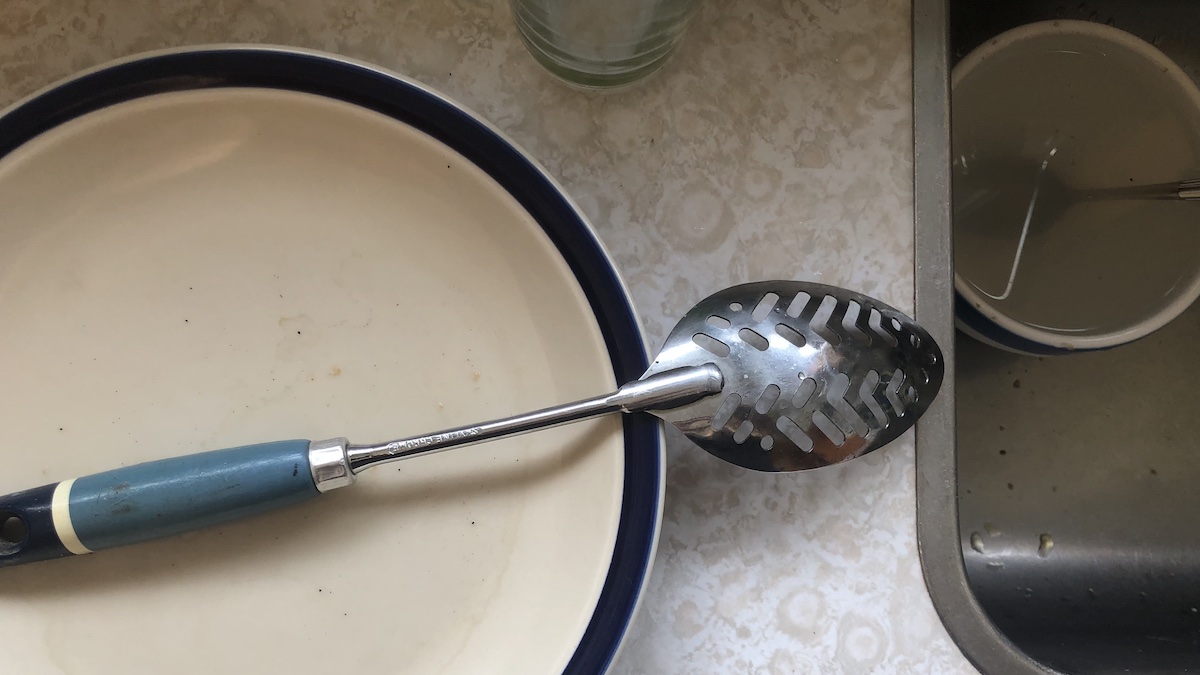
A photo of a kitchen sink at the author's family bach. The dishes have been abandoned.

Give it to your sister

I can feel my hackles rise any time someone invites us to turn to Luke 10, the story of Mary and Martha. The narrative in my head goes something like, “Here we go again, let’s take a closer look at how I’m not being enough by doing too much,” accompanied by an eye-roll that I may or may not be able to internalise.

Now I’m clearly projecting a whole lot on to the Scripture here, and on to the people who teach from it. But I’ve wrestled with this portion often enough to come away jaded almost every time it’s opened. Not because of the story or the message, but because of the naivety with which it is often applied.

What I would really like is for someone to talk about how pissed everyone would have been if Martha had taken a seat with Mary at Jesus’ feet.

Continue reading

Standard

His body broken for you

Not so long back I spent a week with fellow leaders on an Arrow Leadership course. Three residentials in, and with a commitment to open-heartedness and a safe environment, we’ve been sharing places in our hearts that few others see. One morning after we had collectively unburdened our leadership pain, passing the tissues from one to the other, one of the co-ordinators shared a prophetic dream she’d had the night before which led to her to proclaim over each one of us and over our pain: “His body broken for you.”

It was a deeply moving moment, and it’s a proclamation that I keep coming back to and centring my prayers around. The more I reflect on it, the more I understand how it answers a need within me that little else has been able to touch.

Continue reading

Standard

Put some cream on top and call it pudding

I’ve been there a few times now: in the middle of a complex bake and it’s starting to all fall apart. Maybe you forgot halfway through that you were making a double-batch and now the proportions are all off; or you missed adding the eggs a few steps back; or (I’ve done this a few times) you kept the motor running on the food processor while you added the eggs in some false efficiency, and now you’ve blitzed a whole shell into the mixture. 

Whatever happened, you’re now at the point where even your best efforts to rescue the situation are going to produce an imperfect result, and the best move is quite possibly to throw it all out and start again. Depending on your resources available, it can feel like an impossible choice (high baking drama, I know!)

Recently I noticed a similar impulse rising within me as I considered my year thus far. Could I dump it all and start over fresh? Surely I’d do a better job the second time around.

Continue reading

Standard

This is what we’ve got to work with

I haven’t made any new year resolutions this time around. I know the whole practice is naive but I usually do, and I have to say I did rather well with 2022’s—that’s what comes with setting the bar sufficiently low: take the stairs when possible, and have cream in your coffee more often (they came as a pair). 

While I haven’t set any resolutions, I did sit down this week and do that Christian thing where you ask God for a word for the year. Social media tells me that when other people do this, they get things like “golden paths,” “open doors,” or something similarly filled with possibility and promise. What did the Lord say to me? “This is what we’ve got to work with”. 

Oh. 

Um, thanks?

Continue reading

Standard

Listening across difference

About 10-11 years ago my sweet little baby girl turned into a monster of a 2 year old… “it’s like trying to break a wild horse” my husband and I would say to each other as she screamed “me do it” about pretty much everything.

One day I read a parenting piece by Nigel Latta, I thought maybe he was going to give me 5 steps how to turn my wild horse into an obedient cherub. But instead he explained how for some children who are characteristically stubborn, the way their brains are set up is to assume that they are right. And so when information to the contrary comes from the outside, it’s almost that it does not compute. And he also said that stubborness has a strong genetic component. It’s what I like to think of as “parental karma”. My husband and I tend to disgagree publically about who the stubborn one was between us, it’s both–his mother tells tales–but really, I know it’s mostly me.

Continue reading

Standard
A piece of woollen crochet with an unravelling thread

Get it together

It is a great consolation to me that God “is mindful that we are but dust.” (Ps 103:14 NASB). 

Myself, however? I tend to live not only un-mindful of that, but in denial of it. We all prefer to pretend to ourselves that we’re something far more substantial, that we have it together—maybe there’s ups and downs and twists and turns in our stories, but at least we know where they’re going and we are making it happen. But it just ain’t so. 

How dusty of us to live denial of our dustiness*

Continue reading

Standard
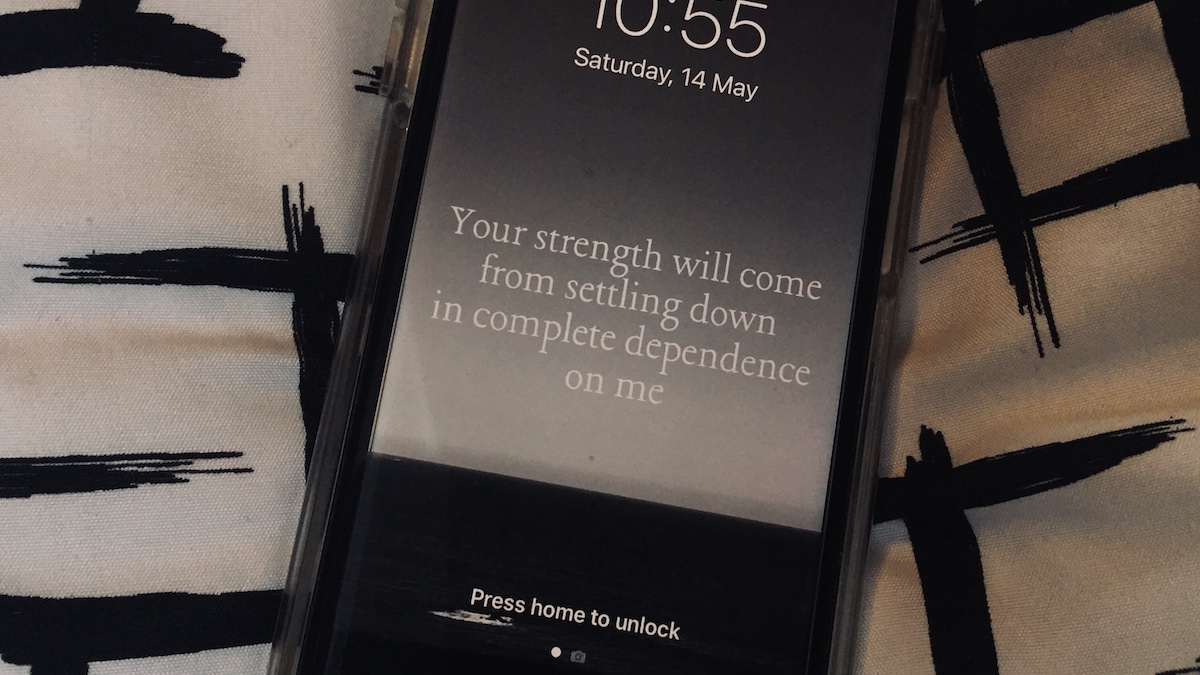
A photo of Maja's phone background with the phrase "your strength will come from settling down in complete dependence in me" on a moody sea and sky landscape

Settle down

For the last few months I’ve had this phrase on my phone’s background

“Your strength will come from settling down in complete dependence on me”

Isaiah 30:15 (The Message paraphrase)

It’s a reminder that I’ve placed before my eyes as frequently as my phone ever is (too often), in the hope that it will eventually soak into my heart. It speaks to my all-too-human impulse to make it happen for myself, to take things into my own hands and bend them to my own will. To make it work… somehow.

Continue reading

Standard